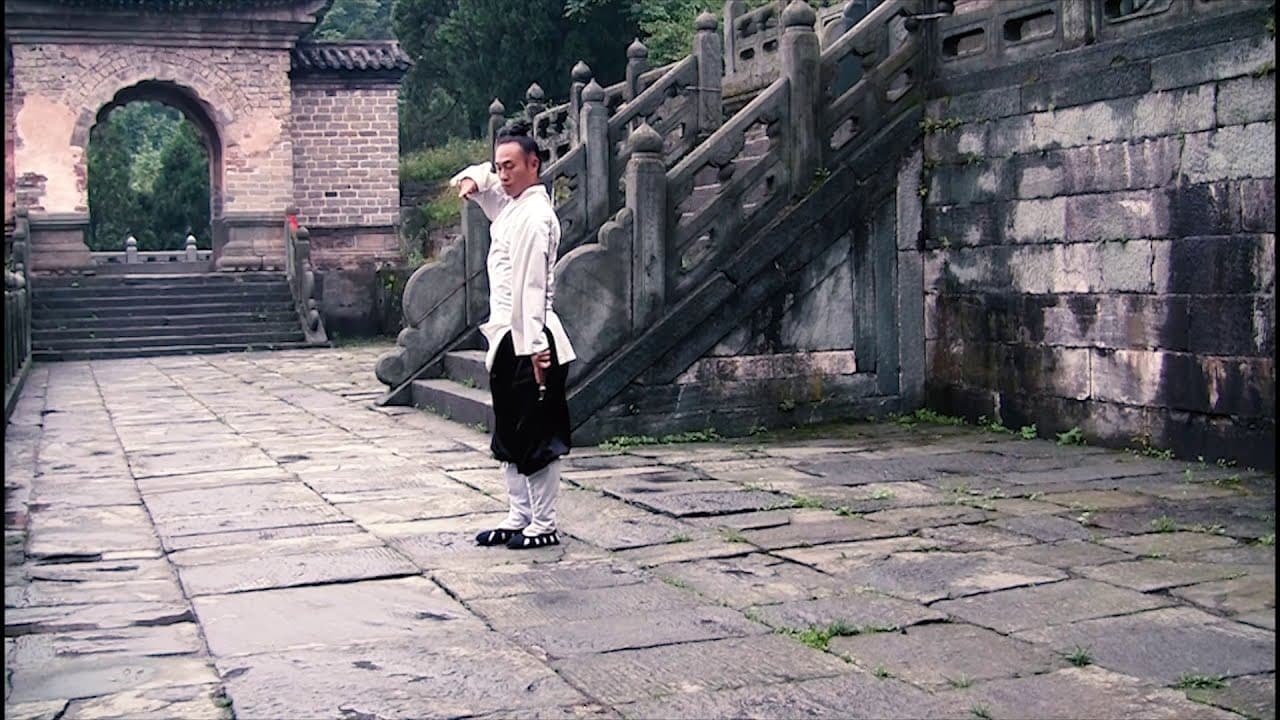
Image extraite de la vidéo “Wudang Mountain, My second home” · YouTube · DaoistGate internal martial arts · droits en attente
Arts internes de Wudang
Qu’est-ce que le style Wudang ?
Le style Wudang est la famille d’arts internes taoïstes née autour du mont Wudang, dans le Hubei. Voici ce que disent les sites de Maître Zhou, à côté de ce que disent les chercheurs et l’UNESCO.
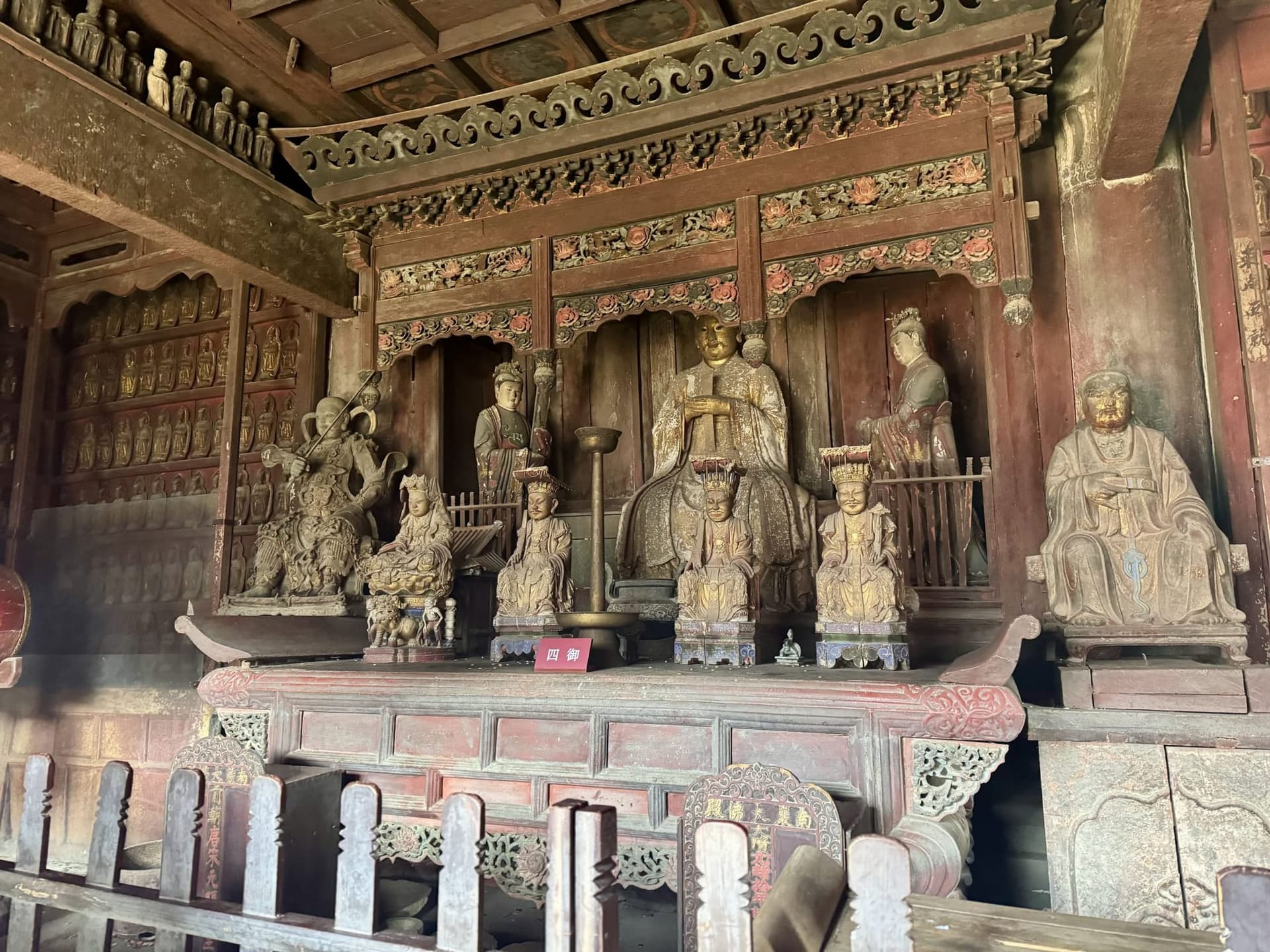
Le mont Wudang
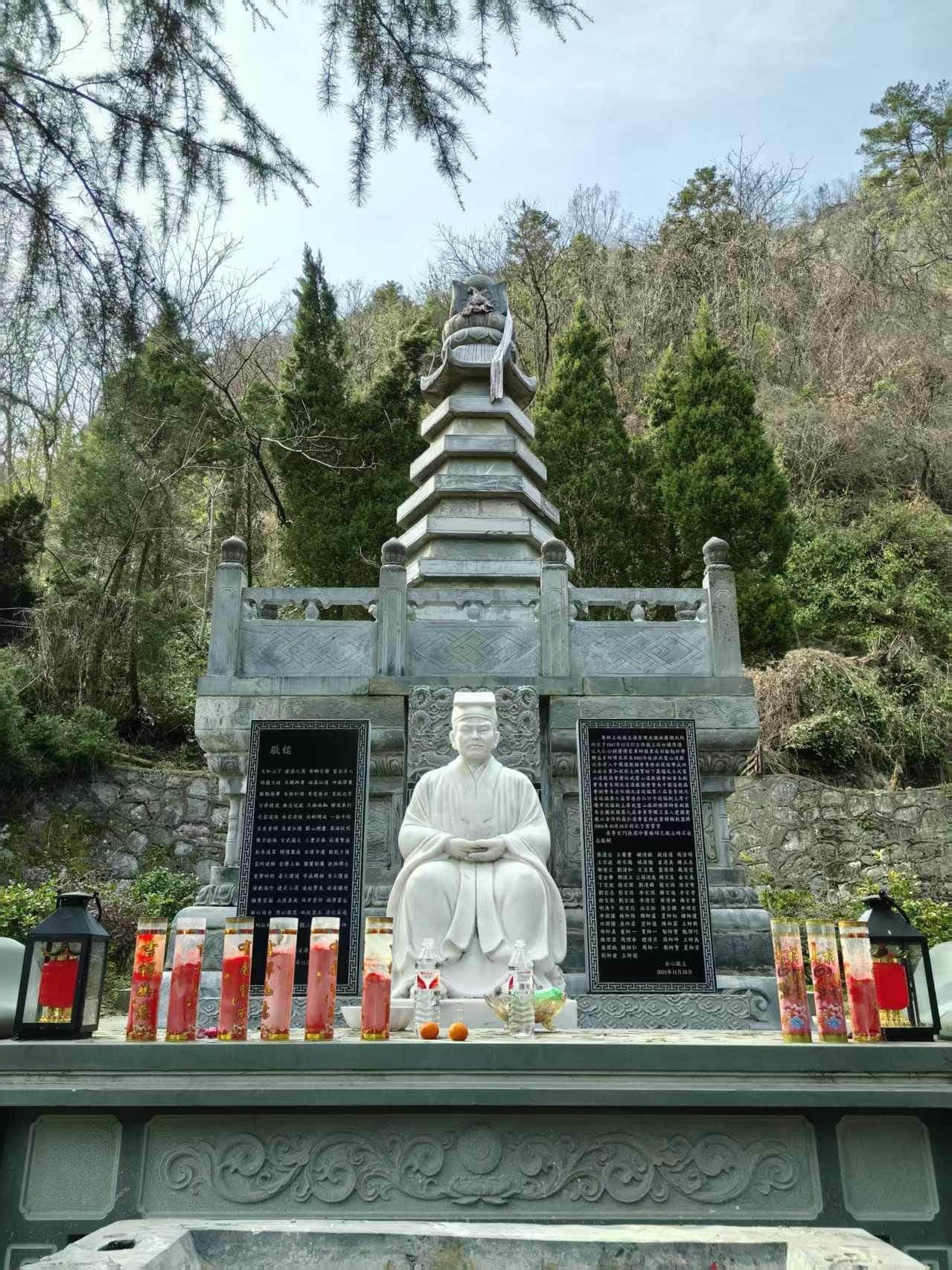
Une montagne taoïste du Hubei, site du patrimoine mondial de l’UNESCO, où Maître Zhou s’est formé adolescent avant d’entrer au temple.
Lire l’histoire complète
L’histoire complète n’existe pour l’instant qu’en anglais (brouillon) ; la traduction suivra.
UNESCO lists the Ancient Building Complex in the Wudang Mountains of Hubei Province as a World Heritage property, describing the mountains as a Taoist centre from the early Tang Dynasty whose building programme reached its height under the Ming. [contexte] Scholars of Daoist studies describe a 'Wudang Tradition' marked by worship of the god Zhenwu, the practice of internal martial arts, the 'Three Doctrines as One,' and an emphasis on inner alchemy. [contexte] Master Zhou's site describes Wudang as a mountain seen by many as the spiritual and historical home of the internal martial arts. [son site] In his own account, his parents sent him there to study martial arts; he trained at the Daoist Association's Martial Arts Academy at Zixiao Palace (Purple Cloud Palace) and later entered the temple, moving to Golden Pinnacle (Jinding) to study scripture, meditation, qigong and the I Ching. [son site]
Sources


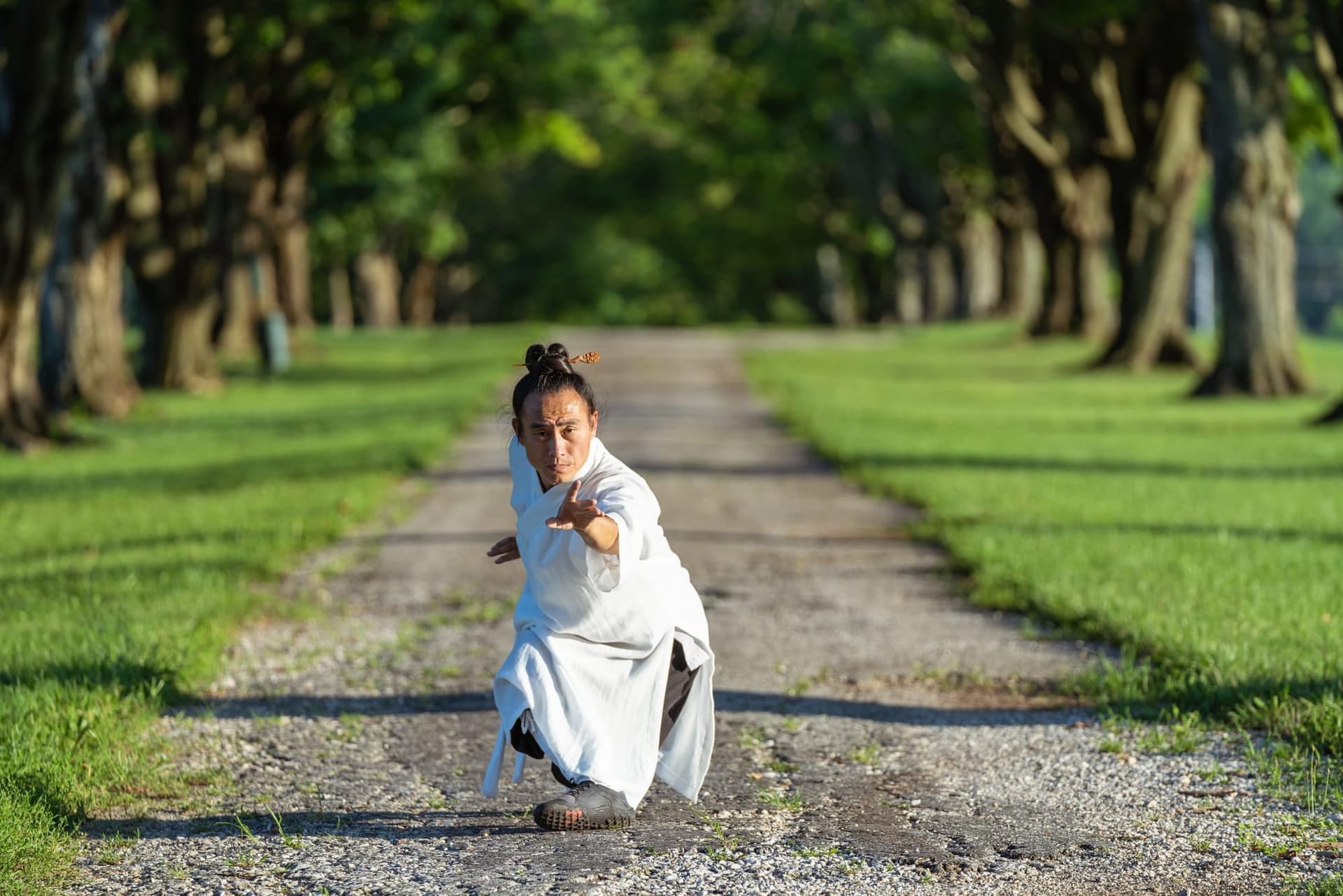
Les arts internes
Neijia : Tai Chi, Xingyi et Bagua. Un mouvement doux, du corps entier, qui entraîne le souffle, l’intention et le qi avec le corps.
Lire l’histoire complète
L’histoire complète n’existe pour l’instant qu’en anglais (brouillon) ; la traduction suivra.
Master Zhou's site names Taijiquan, Xingyiquan and Baguazhang as the three major internal styles, and says internal martial arts focus on correct body structure, meditation and qi cultivation rather than brute force. [son site] It says these arts teach the body's energy, breath and intention to work in harmony with each movement, so that the body acts as a single unit. [son site] A 2025 historical study notes that Wudang martial arts have traditionally been classed as 'internal' as opposed to 'external' arts, and that debate over this classification and over the origins of taijiquan emerged in the 1930s. [contexte] The same study concludes that Wudang martial arts rest on historical foundations, and traces their modern revival after the Cultural Revolution, beginning with a 1979 national call to collect martial-arts heritage. [contexte]
Sources


Racines taoïstes
Les arts de Wudang ont grandi dans les temples taoïstes. Le Taiji est un principe de changement et d’équilibre ; le Taijiquan est l’art martial qui l’exprime.
Lire l’histoire complète
L’histoire complète n’existe pour l’instant qu’en anglais (brouillon) ; la traduction suivra.
In the abstract for his talk at the Sixth Daoist Gate Conference (Nov 8, 2026), Master Zhou distinguishes Taiji (太極), a philosophical concept about change, balance and the relationship of complementary forces, from Taijiquan (太極拳), the martial art that expresses it. [son site] His Taiji page grounds Wudang Taiji in yin-yang theory, the Dao De Jing and the Daoist idea of wu wei, acting only when the moment is right. [son site] His Qigong page says that in the Daoist community such practices are done in a spiritual context, where the major goal is self-cultivation and a stronger relationship with the Dao, not healing alone. [son site] Historians caution that the legend of Zhang Sanfeng creating these arts, which his site tells as a legend, has no direct historical record behind it, and that the word 'taijiquan' appears in written texts only from the mid-to-late nineteenth century. [contexte]
Sources
- Sixth Daoist Conference page incl. Zhou's talk abstract and bio (daoistgate.com)
- Wudang Taiji Quan (daoistgate.com)
- Qigong (daoistgate.com)
- 'A historical reexamination of Wudang martial arts in China', Bulletin of Nippon Sport Science University 54 (2025), abstract
- Adam D. Frank, 'Enacting a Daoist Aesthetic through Taiji quan Training', Journal of Daoist Studies 6 (2013) (citing Douglas Wile; read via search excerpt)


Tai Chi
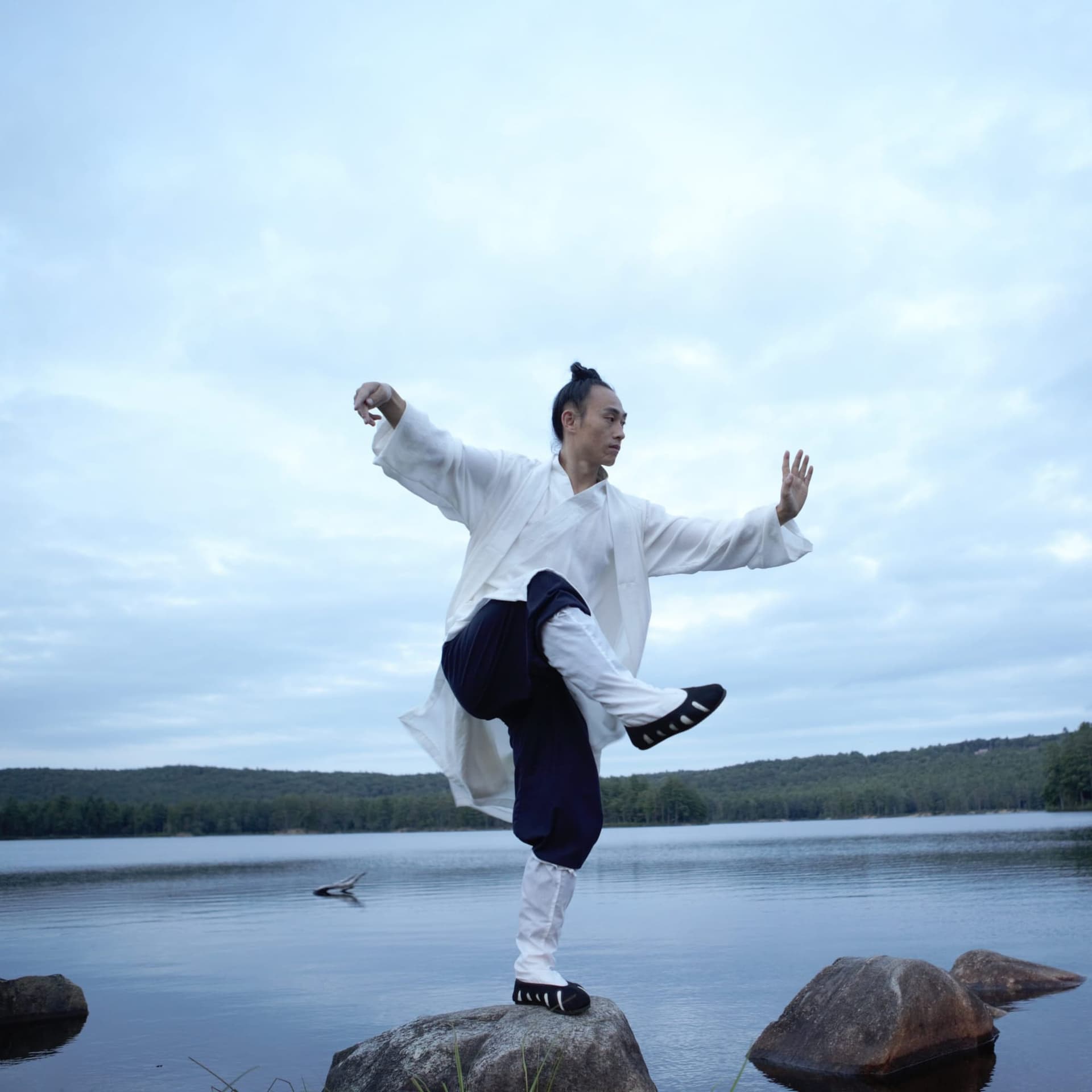
Tai Chi tel qu’il est enseigné à Daoist Gate : les formes 13, 28 et 108, l’Épée Taiji et les Cinq Éléments Taiyi. Mouvement doux, enraciné, du corps entier.
Lire l’histoire complète
L’histoire complète n’existe pour l’instant qu’en anglais (brouillon) ; la traduction suivra.
His site says Wudang Taiji Quan ('Supreme Ultimate Fist') develops balance and rooting, with relaxed, flowing movement in which the whole body is used as a single unit. [son site] It describes the principle of 'overcoming hardness with softness': not relying on strength, but waiting for the proper moment and redirecting an opponent's own force, with a Dao De Jing passage about water as its illustration. [son site] His teacher-certification curriculum lists five Taiji forms: Wudang Taiji 28, 108 and 13, Wudang Taiji Sword, and Tai Yi Five Elements. [son site] Scholars note that some taijiquan styles refer explicitly to Daoism, and name Wudang style, centred on Wudang Mountain, as an example. [contexte]
Sources


Xingyi et Bagua
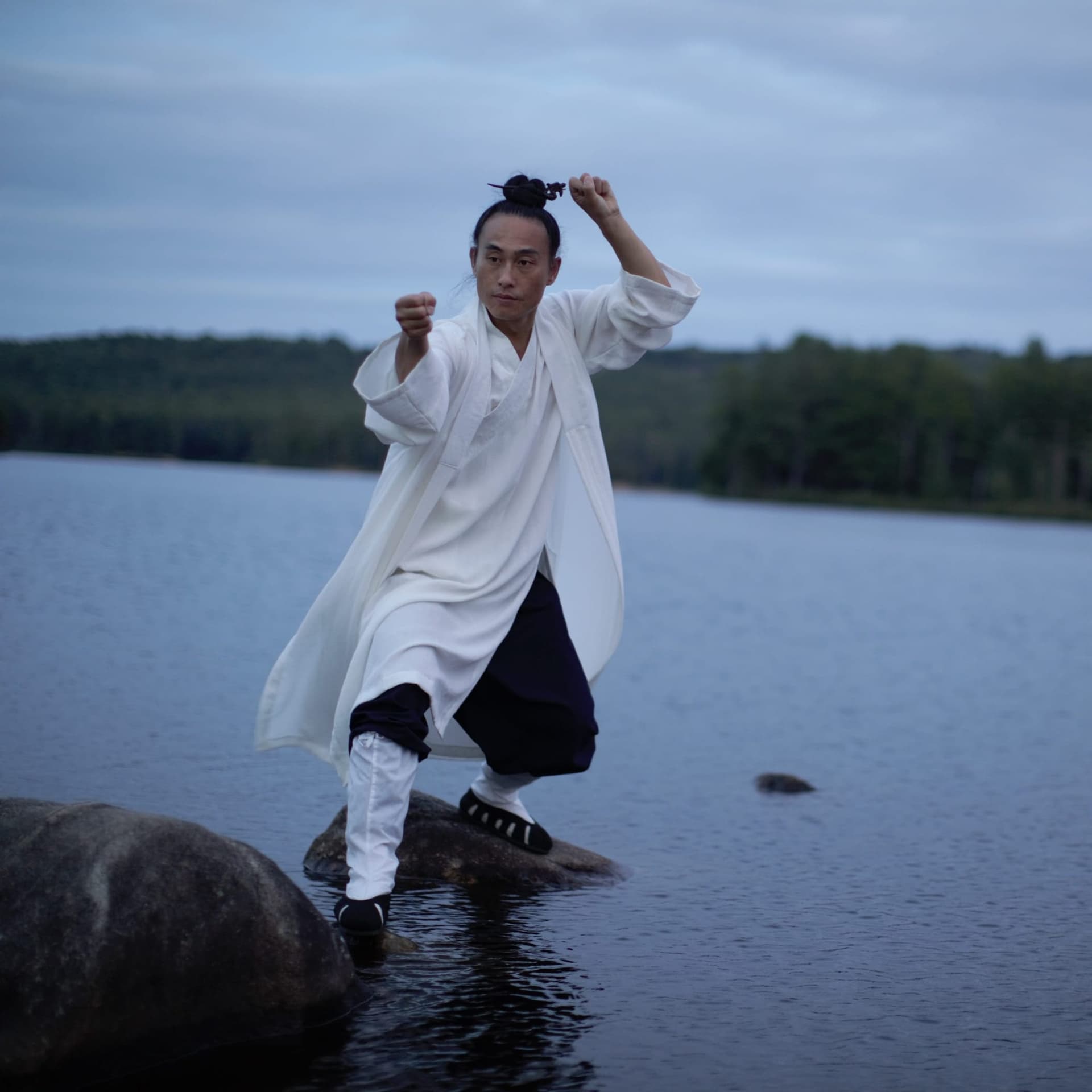
Les cinq poings et les douze animaux du Xingyi ; la marche en cercle et les huit changements de paume du Bagua. Deux des trois arts internes, tels que les enseigne Maître Zhou.
Lire l’histoire complète
L’histoire complète n’existe pour l’instant qu’en anglais (brouillon) ; la traduction suivra.
His site describes Xing Yi Quan (Form-and-Intention Fist) as one of the three famous internal martial arts, built on five elements (Pi, Beng, Zuan, Pao, Heng) and animal forms, with Wudang Xingyi giving greater focus to health preservation and the inter-relationships of the Five Elements. [son site] It describes Bagua Zhang as circle-walking with eight palm changes, using circular stepping and snake-like movement to sidestep and deflect, and says the foundation of Wudang Bagua lies in standing meditation and turning methods. [son site] In his own account of training on Wudang Mountain, he learned Xingyi in his second year and Bagua in his third, and Xingyi became one of his specialties once he was promoted to coach. [son site] Both are separate disciplines in his teacher certification: Xing Yi with the five elements and twelve animal forms, and Bagua with the eight palm changes. [son site]
Sources


Qigong et Neidan
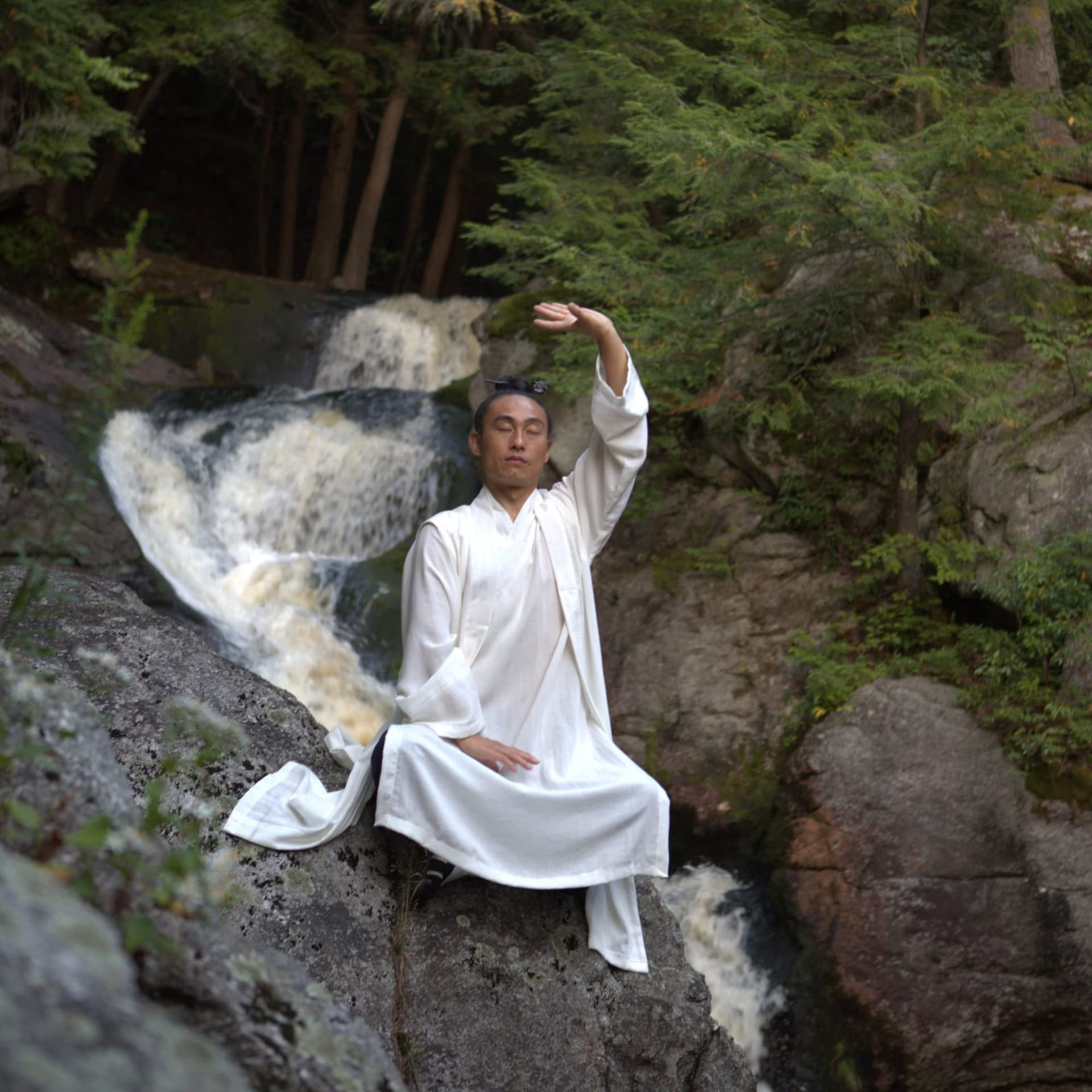
Qigong (Daoyin) et Neidan, l’alchimie interne : pratiques du souffle, du mouvement et de la culture intérieure, tournées vers l’épanouissement de soi autant que vers la santé.
Lire l’histoire complète
L’histoire complète n’existe pour l’instant qu’en anglais (brouillon) ; la traduction suivra.
His Qigong page says many Daoist practices are called Dao Yin ('guiding and leading energy') and are done in a spiritual context whose major goal is self-cultivation and a stronger relationship with the Dao. [son site] In a post credited to him, Neidan is described as a method that takes the body as cauldron and furnace and jing (essence), qi and shen (spirit) as the ingredients, to form an 'inner elixir' within the body. [son site] Another post credited to him explains that qigong, meditation and inner alchemy can look alike from outside but differ in cultural origin, goals and thought processes. [son site] Academic overviews describe neidan as a contemplative self-cultivation tradition that first appears in literature in the eighth century, became widely practised from the Song dynasty, and works with the practitioner's own body rather than laboratory substances. [contexte] His conference bio says he was trained in ritual arts, chanting, divination and internal alchemy, and his channel carries a Nei Dan / Inner Alchemy class series. [son site]
Sources
- Qigong (daoistgate.com)
- Inner Alchemy/NeiDan, post credited 'Author: XuanYun Zhou' (daoistgate.com, 2020-06-07)
- What is the difference between Qigong, Meditation, and Inner Alchemy?, post credited 'Daoist Master XuanYun Zhou' (daoistgate.com, 2020-10-17)
- 'Perspectives on the historiography of neidan studies' (University of Helsinki thesis; read via search excerpt/abstract)
- Sixth Daoist Conference page incl. Zhou's talk abstract and bio (daoistgate.com)


En quoi il diffère
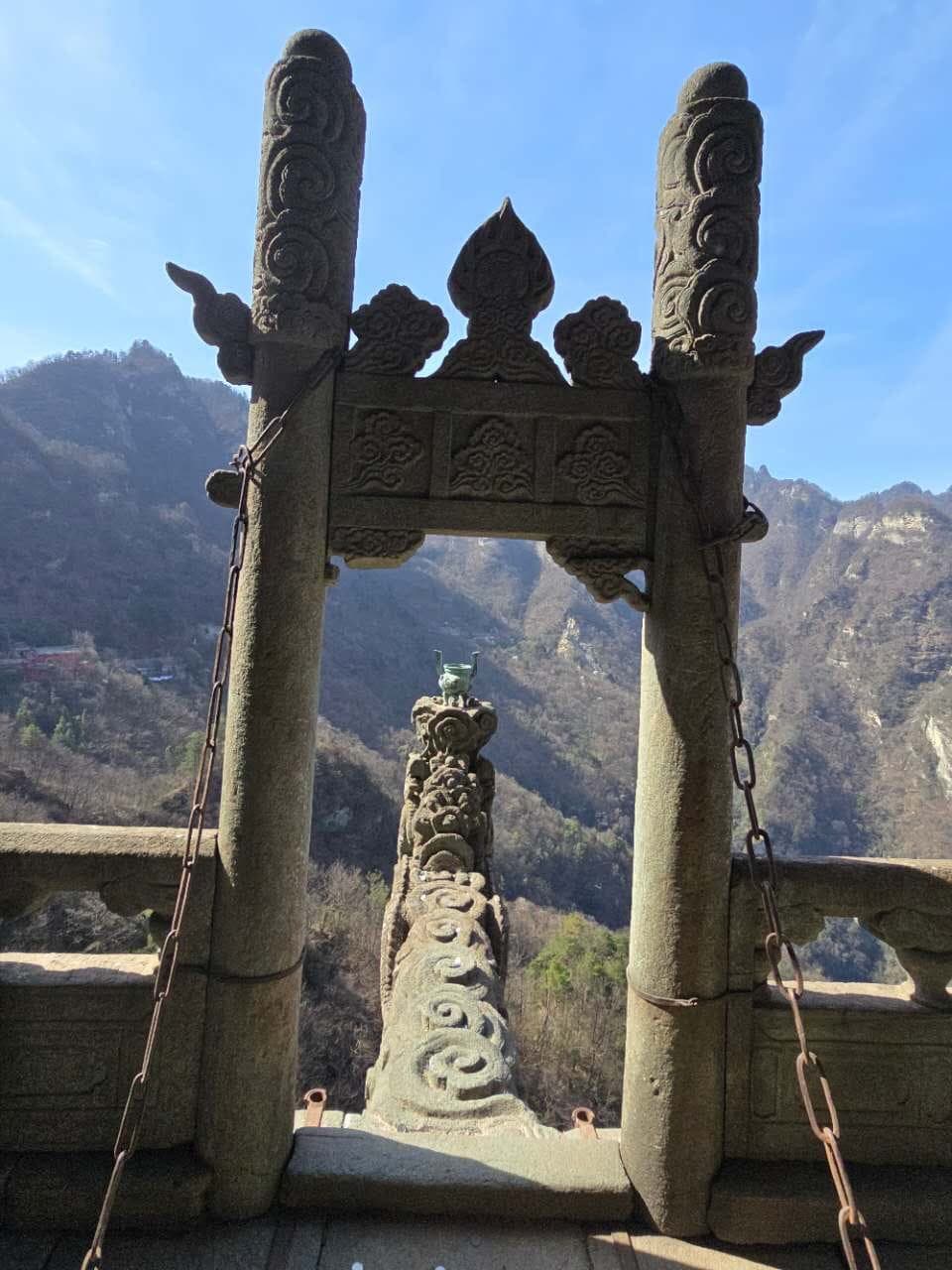
Wudang est un style « interne » : doux, circulaire, détendu. Shaolin est généralement dit « externe ». Maître Zhou explique ce contraste avec ses propres mots.
Lire l’histoire complète
L’histoire complète n’existe pour l’instant qu’en anglais (brouillon) ; la traduction suivra.
In a first-person post, Master Zhou says many people divide martial arts into 'external' (hard) and 'internal' (soft) styles, which differ in how they generate power, respond to an attack and use qi. [son site] He describes Shaolin as external, building muscle, speed and strength and meeting force with force, and Wudang as internal, training focus, timing, awareness and precision and redirecting the attacker's own strength with circular, relaxed, fluid movement. [son site] He adds that Wudang and Shaolin are both 'temple styles' once practised in a religious setting, and that Wudang is famous for its sword forms. [son site] Scholars treat the internal/external split as a classification with its own history, and a 2025 study traces how debates about it, and about the origin of taijiquan, emerged in the 1930s. [contexte] A scholarly paper on Wudang's modern revival notes that its temples and martial arts academies remain closely identified with the Daoist religion, while taiji is also taught in school athletic programs and performed on stage. [contexte]
Sources
- Shaolin Vs. Wudang, first-person post (daoistgate.com, 2020-05-28)
- Religion & The Martial Arts, first-person post (daoistgate.com, 2020-05-28)
- 'A historical reexamination of Wudang martial arts in China', Bulletin of Nippon Sport Science University 54 (2025), abstract
- 'The Revival of Wudang' (Cardiff University repository paper; read via search excerpt)
Comment il enseigne
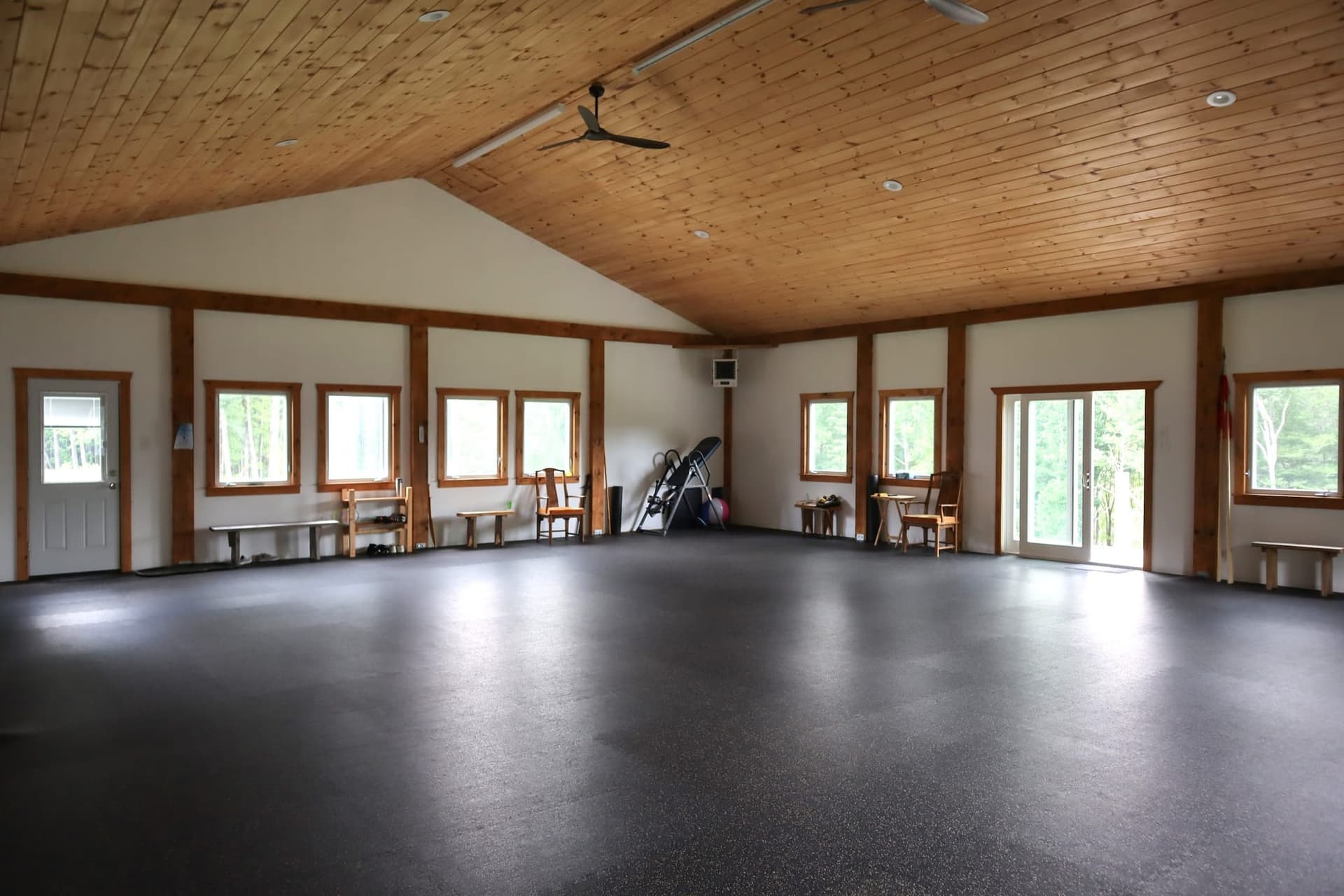
Formes et armes, Qigong et méditation, à la manière de Wudang. Ouvert à toutes les croyances, avec un parcours de certification pour qui souhaite enseigner.
Lire l’histoire complète
L’histoire complète n’existe pour l’instant qu’en anglais (brouillon) ; la traduction suivra.
At his annual Poland workshop, mornings begin with Five Animal Play Qigong, days go to forms such as the San Feng Wudang Sword, Xingyi basics and the 108-movement form, and evenings turn to standing and sitting meditation and talks on Daoist philosophy. [son site] His teacher certification covers five Wudang disciplines (Taiji, Four Season Qigong, Bagua Zhang, Xingyi Quan, and Kung Fu and Weapons), with recertification every three years. [son site] Candidates write a personal statement, and the site says he considers each student's physical abilities and overall journey; teachers-in-training give free or donation-based community classes, including for seniors in senior centers, parks and libraries. [son site] He has written that people of any belief can practise Wudang martial arts, mentioning atheist, Catholic, Jewish and Muslim students. [son site] His stated vision is to pass on the traditional Wudang healing arts by training more Taiji and Qigong teachers, so people of all classes and colors can benefit. [son site]
Sources


